


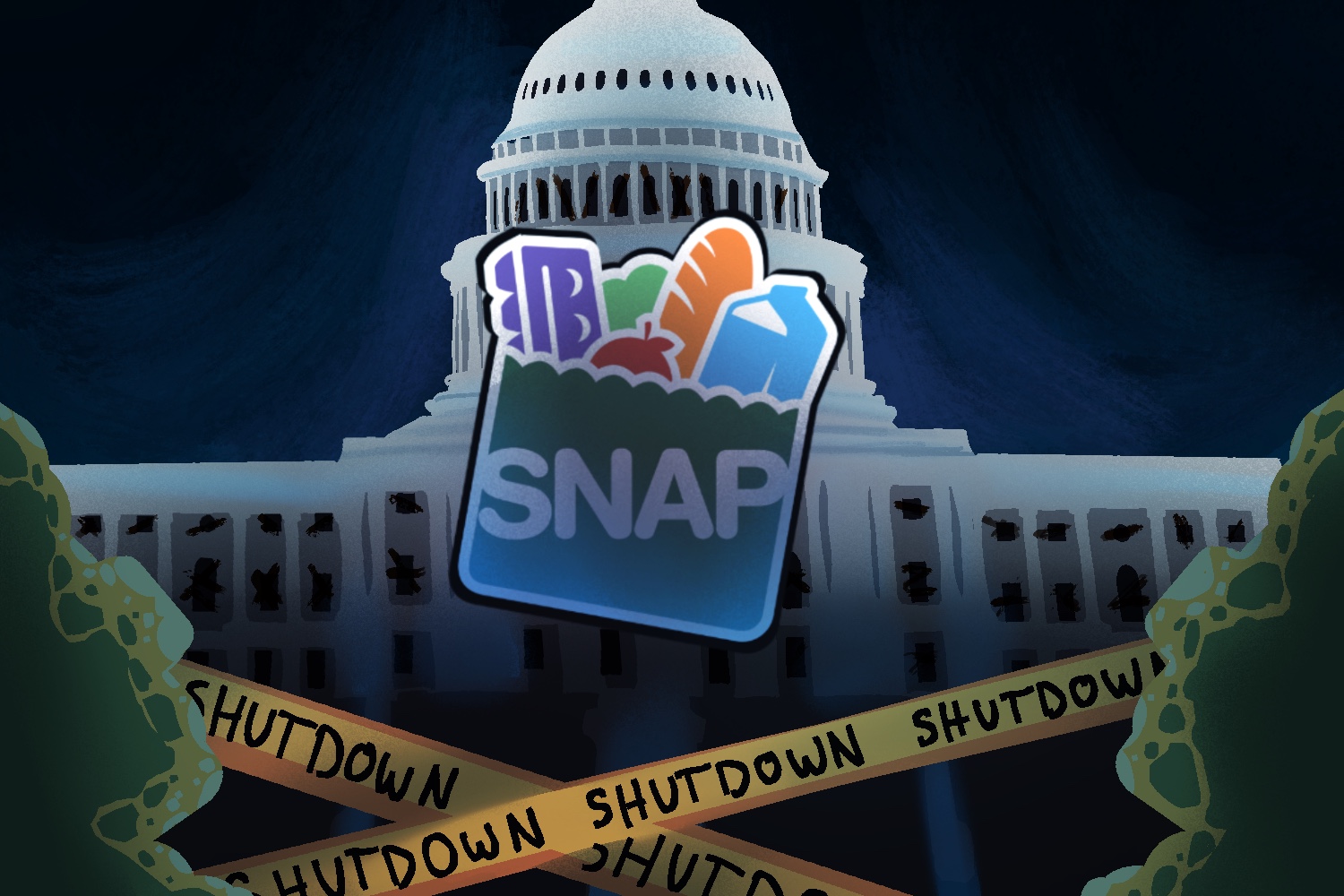

SNAP benefits were cut nationwide on Nov. 1 due to the government shutdown. The USDA, which manages these benefits, issued a notice stating that federal food aid will not be provided for the upcoming month as “the well has run dry.”
SNAP, formerly known as food stamps, is the Supplemental Nutrition Assistance Program, which provides food assistance for roughly 42 million Americans each month. The program is federally funded, providing benefits for recipients through an EBT card that is used for most food purchases at the majority of grocery stores. Without access, it leaves those who are most vulnerable, including children, veterans, elders, people with disabilities, and working, low-income families, at high risk for food insecurity.
With the ongoing government shutdown, SNAP funds were expected to run out at the start of November unless an agreement was made prior between the Democratic and Republican parties.
According to a memo released on Oct. 24 by the USDA, the Democratic Party was criticized for refusing to put out a clean continuing resolution to allow benefits to be distributed. The USDA also claimed the $5 billion in contingency funds, used for national emergencies, cannot be used to cover SNAP benefits since they were not “legally available.” Instead, these funds cover natural disasters like hurricanes, tornadoes, and floods.
Since the release of the USDA’s memo, states across the U.S. have taken measures to try and prevent SNAP cuts from leaving a much bigger impact on their residents. On Oct. 28, the New York Times reported that more than 2 dozen states sued the Trump Administration for their refusal to tap in and provide funding, following a request for a federal judge to intervene.
“The suit was filed by a mix of Democratic attorneys general and governors from states including Colorado, Illinois, Kentucky, Maine, Maryland, Nevada, and North Carolina,” The New York Times said, “If they prevail, it could compel U.S.D.A to tap its emergency funds and provide benefits to those states’ residents, though the exact scope of any relief would be up to a judge.”
Two federal judges from Massachusetts and Rhode Island ruled for the Trump Administration to distribute SNAP funding from the contingency fund by either full or partial payments. By Monday, the administration confirmed to partially fund SNAP benefits, as reported by the New York Times, mentioning how low-income families will still be at risk for food insecurity and financial difficulties when they receive half of their benefits compared to the usual amount.
On Tuesday, President Trump suggested that SNAP benefits not be paid during the shutdown, bringing confusion to those awaiting their benefits. However, the White House reported that the administration will still follow through with the order despite Trump’s statement.
Meanwhile, in Illinois, nearly 2 million Illinoisans benefit from SNAP and are currently searching for backup plans. According to ABC7 Chicago, Governor JB Pritzker signed an executive order last Thursday with $20 million in state funds for food banks in an effort to support food pantries across the state. Social studies teacher Susan Fuhrer explains the process behind the state’s distribution of SNAP funds that may be delayed for weeks or even months.
“If Illinois gives those benefits to those Illinois recipients, that’s going to be moving our money around from Illinois,” Fuhrer said. “So, there’s probably going to be a delay, but right now, the federal judges have said that no, we do need to give these recipients their benefits for SNAP.”
Locally, organizations, food pantries, and food banks have been trying to keep up with the high demand for food while people are increasingly lining up for assistance. At Metea Valley, there has been discussion about possibly hosting food drives and collections in order to raise awareness on the issue. Fuhrer highlights the importance of giving back to the community during this time.
“I know that right now, like if you have any funds to donate or to donate to any food pantries, it would probably be really needed at this point,” Fuhrer said, “Anything that you could do to help people out at this point would be great.”
For more information on receiving food assistance, volunteering, or donating, visit Loaves & Fishes, Feeding America, or search on FindHelp.org for a list of food banks or pantries near you. If your family’s income has changed or you have lost SNAP benefits, you can apply for the Free and Reduced-Priced Meals application through District 204’s website.
▸ Rude or obscene language (i.e. swear words, sexual jokes, violent threats, etc.)
▸ Hate speech (i.e. racism, sexism, homophobia, etc.)
▸ Insults towards a specific student or a teacher
▸ Content that is irrelevant to the article or does not add to the discussion
▸ Submitting comments under somebody else's name
Refer to the student handbook for further specifics on what is considered appropriate.
The Social Media Editor will read and evaluate all comments. Should there be any issues with a particular comment, the Social Media Editor will consult the newspaper adviser and Online Editor-in-Chief.