




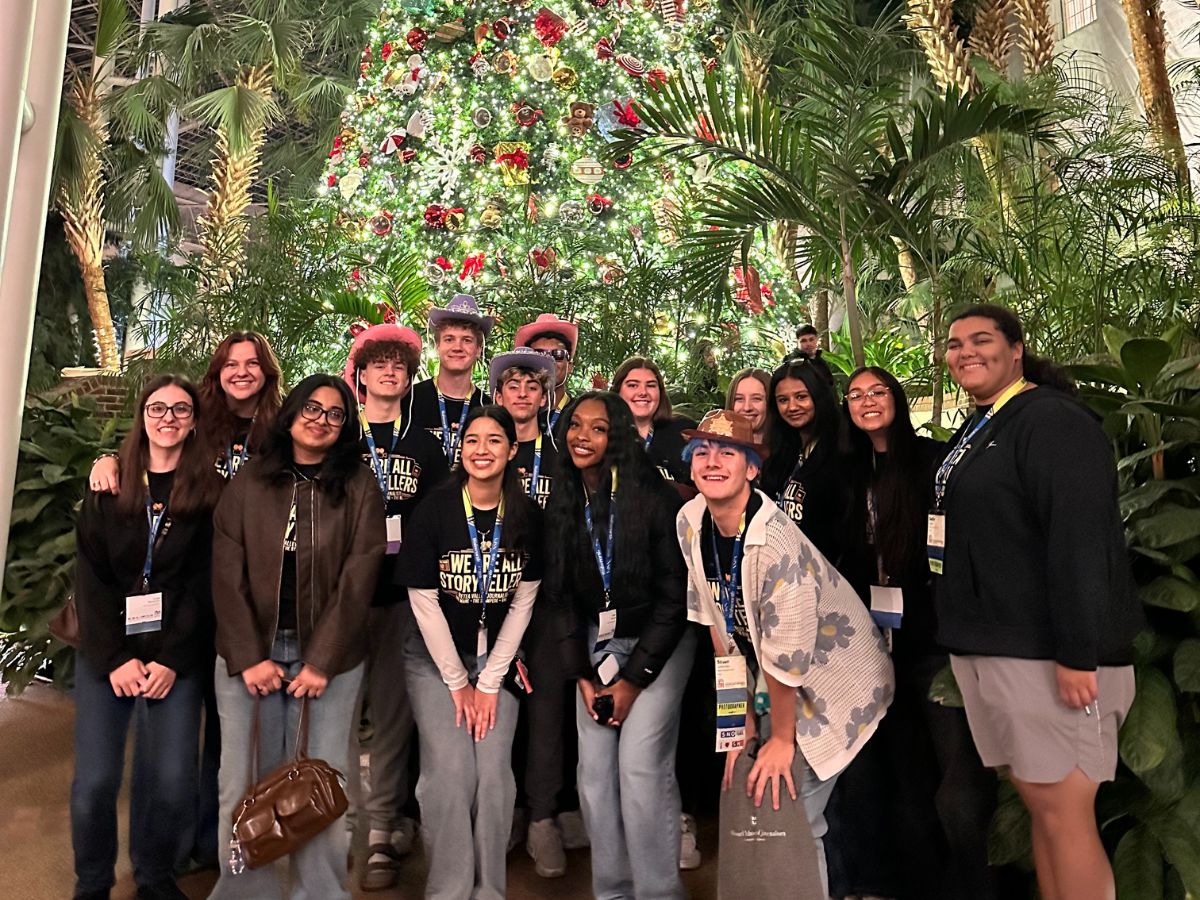
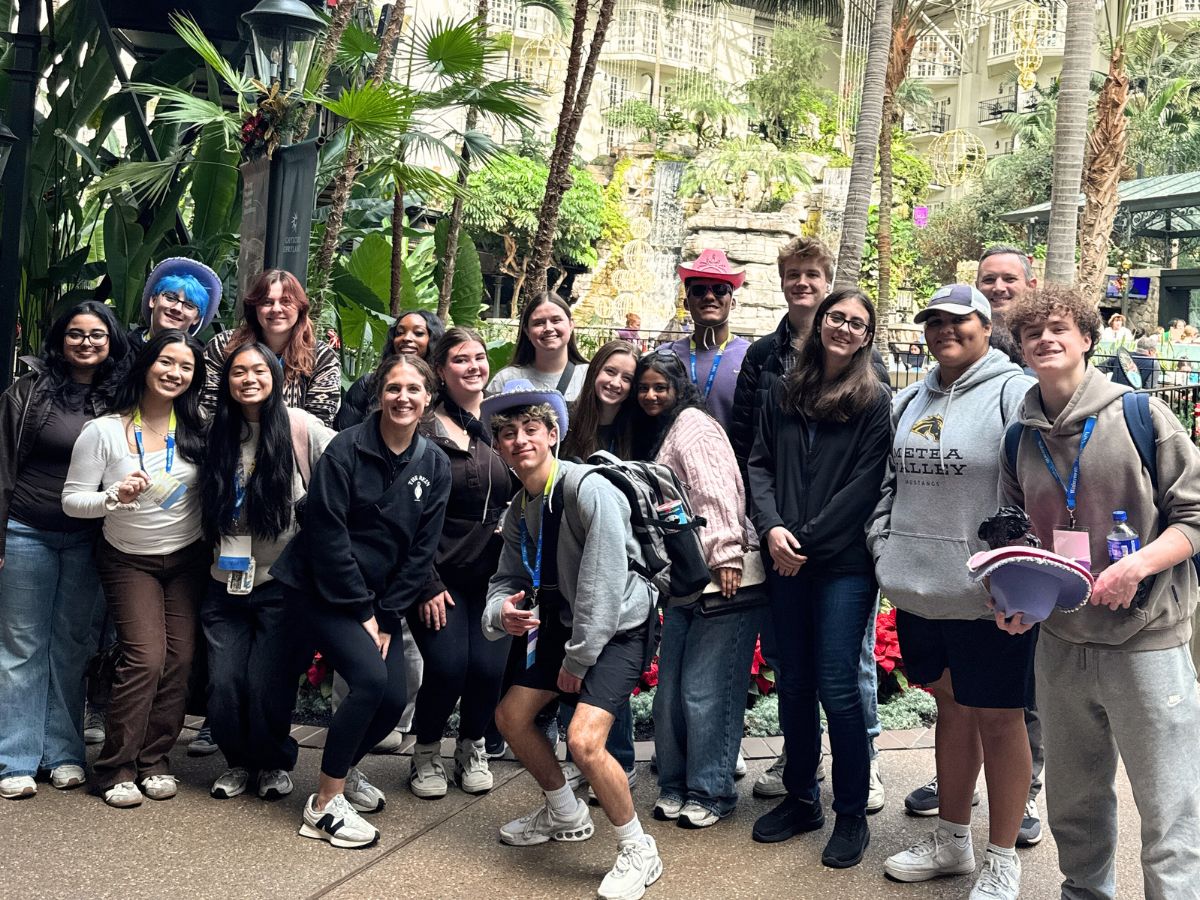
Metea’s journalism team recently went to Nashville for a three-day trip, attending the National JEA/NSPA (Journalism Education Association/National Scholastic Press Association) convention. The convention hosted 5000 student journalists from 48 states in the U.S. and six countries around the globe. The convention provided optional courses focusing on newspaper, yearbook, and broadcast journalism. Students had a variety of opportunities with a wide range of classes.
Journalists also had the opportunity to attend the college exhibition held below the convention, which featured over 30 colleges and informational meetings for students to research. Free merchandise was offered to all, as well as contests, raffles, free headshots, and more.
JEA/NSPA’s main goal is to celebrate student journalism, holding awards and competitions to appreciate and encourage future journalism. Metea’s 2024-2025 lead investigative reporter, Isabelle Leofanti, came fourth in her category for the phenomenal story on the safety concerns of the Metea turf.
Throughout the sessions, students made sure to take notes. Options spanned from marketing, leadership, photography, and more media that are essential to journalism.
Since students took quick 45-minute courses aimed towards their specialties and interests, all the reporters were mixed around with different schools for seven hours a day.
“I took one about leadership, …another one that was just about media production in general, which showed some cool examples that I definitely took notes of, such as sports highlights and things that I found interesting,” said Senior Anders Moranchek, sports reporter for the Stampede.
While in Nashville, students got to do fun activities outside of the resort. From the Charlie Brown Christmas experience, to the Regal Opryland Mall, and also the Opry Backstage Grill.
“It was, honestly, I’m not trying to be dramatic, like one of the most eye-opening things that I came to. I came into it not knowing what really [was going on] and then I realized how much the environment is something I’m super passionate about,” said junior Marissa Vitorillo, a video editor for the mane.
▸ Rude or obscene language (i.e. swear words, sexual jokes, violent threats, etc.)
▸ Hate speech (i.e. racism, sexism, homophobia, etc.)
▸ Insults towards a specific student or a teacher
▸ Content that is irrelevant to the article or does not add to the discussion
▸ Submitting comments under somebody else's name
Refer to the student handbook for further specifics on what is considered appropriate.
The Social Media Editor will read and evaluate all comments. Should there be any issues with a particular comment, the Social Media Editor will consult the newspaper adviser and Online Editor-in-Chief.