



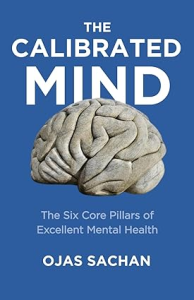
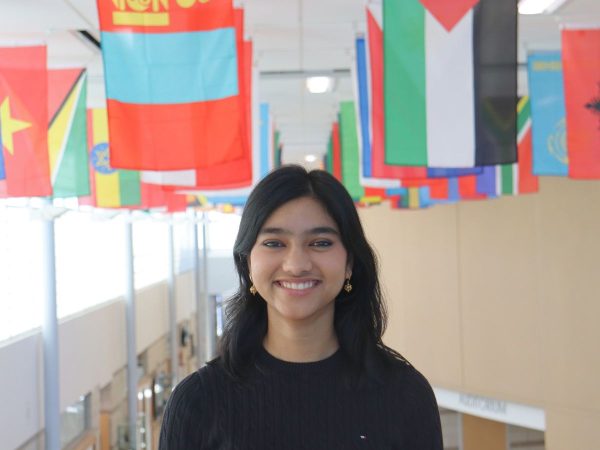
Junior Ojas Sachan has added “author” to his list of accomplishments after writing and self-publishing a book about teen mental health. While drafting and editing the book, Sachan managed schoolwork and extracurricular activities, aiming to give peers a tool to navigate the growing mental health crisis.
“Mental health, especially in the modern generation, is declining rapidly,” Sachan said. “So I wanted to give people of my generation [a] tool that they can use to combat this kind of environment.”
In 2023, the Centers for Disease Control and Prevention reported that 40% or 2 in 5 U.S. high school students reported feeling extended hopelessness and sadness.
“I noticed myself, as well as with friends around me,” Sachan said. “That’s why I [wrote] this book…Mental health is really the foundation of everything else in life.”
Starting in July and finishing in November, Sachan was able to draft most of the book through the summer and edit through the school day.
“I used to spend a lot of time in school revising as well,” Sachan said. “During class, if we ever had work time…I would just hop on my computer and start editing on my Chromebook.” Sachan said.
Unlike many first-time authors, Sachan did not assemble a team of beta readers or have an editor.
“I’m more of the kind of person who doesn’t really like to wait for things,” Sachan said. “I just kind of decided to go for it and see what happens.”
Sachan chose to self-publish through Amazon using its Kindle Direct Publishing platform. According to Kindle Direct Publishing, authors can upload a manuscript, design a cover, and make their book available in paperback and Kindle formats worldwide.
However, uploading a book is only part of the process. Reaching readers is another challenge entirely.
“The main thing that I’m doing for marketing is a YouTube channel,” Sachan said. “I post mental health-related content… The goal is that more people come to my content, and then from there, once they trust me enough, they can buy the book.”
It is a strategy that mirrors what many independent authors do: grow an audience before expecting sales. Platforms like YouTube, Instagram, and TikTok have become informal book marketing engines, particularly for Gen-Z writers.
Each chapter of his book tackles a specific pillar of mental health, from motivation to discipline, blending research with personal experimentation. Sachan is transparent about what is research-based and what is personal practice.
“All the processes and frameworks that I discuss are [scientifically backed]… For example, if I have a chapter on motivation, then I can just do research on what motivation is, how it works… and then try to make a chapter with as much information as dense as possible.” Sachan said. “[And] I explicitly mention, ‘Oh, this is something that I tried that works really well for me.’”
At its core, the book is about reclaiming something he believes teenagers have gradually lost.
In an era where teen mental health statistics can feel overwhelming, one student decided not just to cope but to help. Sachan’s book is available on Amazon, Kindle, and at the Metea Valley Library.
▸ Rude or obscene language (i.e. swear words, sexual jokes, violent threats, etc.)
▸ Hate speech (i.e. racism, sexism, homophobia, etc.)
▸ Insults towards a specific student or a teacher
▸ Content that is irrelevant to the article or does not add to the discussion
▸ Submitting comments under somebody else's name
Refer to the student handbook for further specifics on what is considered appropriate.
The Social Media Editor will read and evaluate all comments. Should there be any issues with a particular comment, the Social Media Editor will consult the newspaper adviser and Online Editor-in-Chief.