




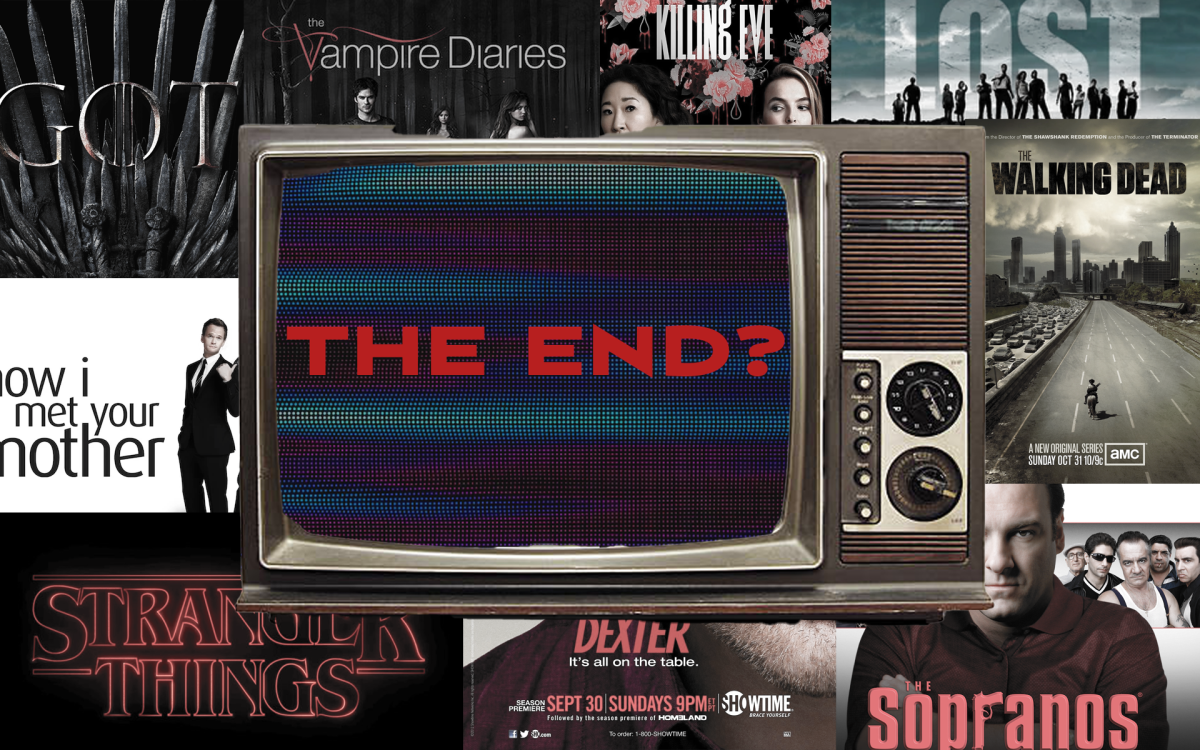
The screen flicks to black as the credits roll; a show you’ve been watching for five years has finally come to a close. You can’t believe it, and there is a slight empty feeling in your chest you can’t shake. Just to make sure it’s really over, you stay until after the credits and refresh the Netflix page, just in case.
Endings suck, and they’re impossible to get right, whether it be for a movie, show, or even relationships. For shows, though, they seem the hardest to do. No matter what the writers choose to do, there is always going to be an unhappy fan.
Okay, let me address the elephant in the room, that is, the ending of “Stranger Things.” While it wasn’t the best ending, viewers certainly made it seem like the writers had personally attacked them somehow.
Without spoiling the show, I will say that the final felt a bit underwhelming, but overall wrapped the plot and characters up in a pretty decent way. But for long-term viewers, the ending was not satisfactory. Imagine dedicating years to making a wildly acclaimed show, trying to find the best ending that will satisfy both viewers and the plot, just for viewers to think that the ending is so bad that they gaslight the whole internet into believing that the ending was fake.
“Conformity Gate” was a fun idea at first, but the longer it dragged on, the more painful it became to see fans grasp at thin air and pretend there was even a straw there in the first place. Why can’t we be content with an ending simply being an ending? Are we afraid of letting things go? Or are we becoming too critical? Maybe it’s both.
With TV shows, especially good ones, it’s hard to let go. It’s hard to let go of the characters we watched grow up, and let go of something we dedicated so much time to. But, let’s face it, if TV shows don’t end, they’re all going to end up either canceled or like “Grey’s Anatomy…”
It’s normal for viewers to be unhappy, and it’s understandable to be sad that something is coming to an end, but it’s not justifiable to be so upset that we turn into a raging critic and attack actors, writers, and producers. We have to understand how truly difficult it is to neatly wrap up a series with a little bow. I mean, come on, how long are we going to hold grudges for? (I’m looking at you “Lost” ending haters)
People get so caught up in nostalgia that once a piece of media changes even a tiny bit, we can’t deal with it. Sometimes a show isn’t going to grow up with its audience, and maybe a viewer that once loved something so much just isn’t the target audience anymore, and that is okay.
It can also be hard to let go of a show when streaming services milk content so much. How can writers neatly end a show that was supposed to end three seasons ago? Well, big news, guys, we as consumers don’t have to watch the show! If it’s getting drawn out and isn’t good anymore, then why are you watching it, then complaining about it?
I know it can be hard to say goodbye, not just to shows, but to anything really. But things can’t last forever. We are also our own people and are allowed to have opinions and feelings of our own. So remember that you don’t always have to jump on the bandwagon of hate and criticism or crazy fan theories.

AJ • Jan 29, 2026 at 7:59 am
Hey I loved how this was written, there was obviously thought put into it, but I must say that there are so many more reasons why the fandom was not happy with the Stranger Things ending that were not touched on, not that you had to talk about them all but I feel as though you didn’t put their feelings into consideration. The main reason why people were not happy with the Stranger Things ending was not just because it ended and they are being too over critical but because the directors did not put enough thought into the last season as a whole, there were many many plot holes, miss characterization and to top it all off they used Chat GPT to write it, it was overall just sad to watch as a writer and a fan.