




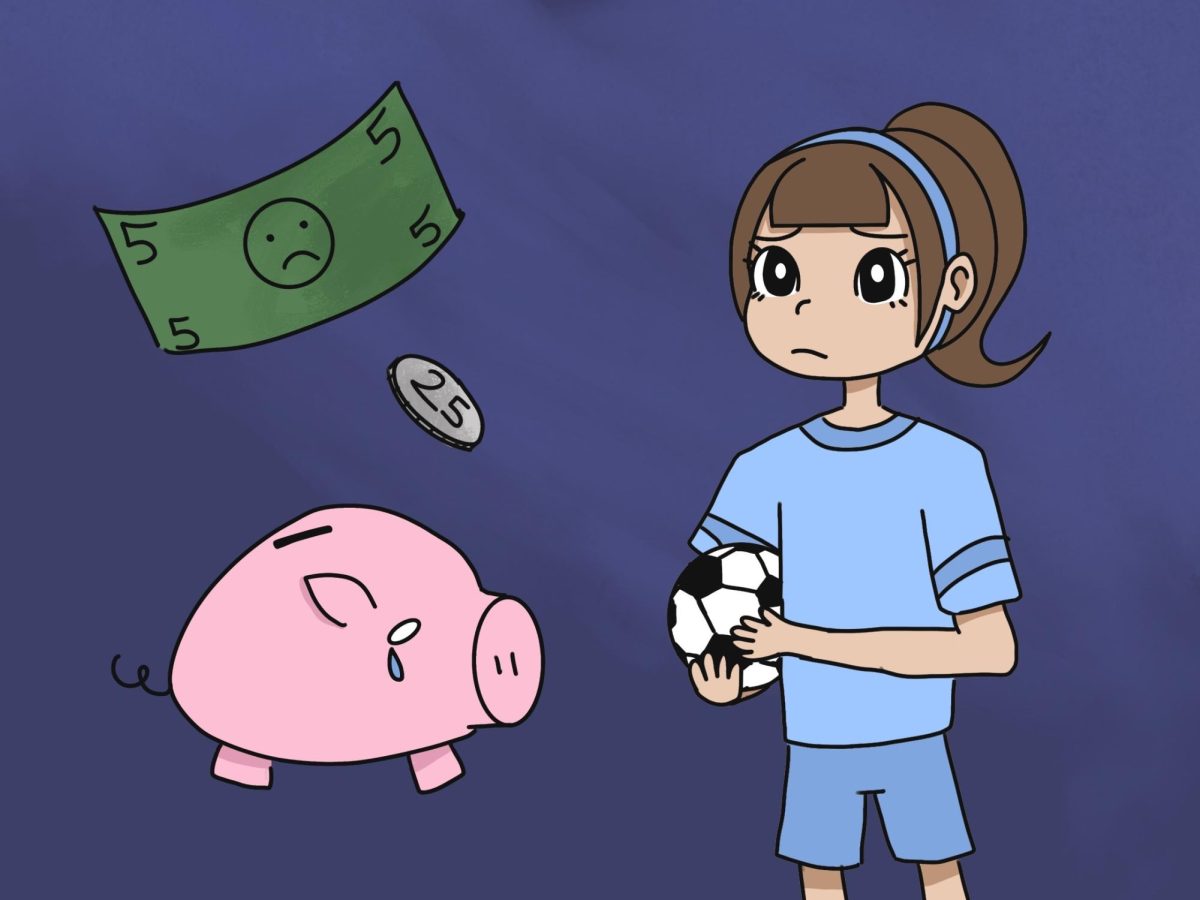
Across America, hundreds of thousands of kids play youth sports. It is seen as an extension of childhood; almost everyone was in a sport at some point. However, as kids get older, their sports get more expensive. Youth sports have evolved into a billion-dollar industry, and it concerns many that youth sports are turning into yet another cash cow.
One of the biggest factors in this is the pay-to-play nature of sports. Families are expected to spend large amounts of money on registration fees, travel teams, coaching, equipment, and tournaments. On average, families spend around $1,500 per child annually on sports, a number that is continuing to grow. Many families simply cannot afford to keep their children in sports long-term if they cost too much money. As a result, access to play is not based on talent or dedication, but also on a family’s ability to pay.
Junior Caden Moeller is unable to play travel baseball because his parents cannot justify the cost of paying for both baseball and soccer.
“If money weren’t a factor, I would most likely play travel soccer and baseball,” Moeller said.
This highlights the financial limitations that are placed on families, the kind of limitations that can kill the passion kids have for a sport simply because they can not afford to play it.
“Knowing the cost that is being paid for me to play this sport adds pressure to myself and creates a mentality that I have to play to a certain standard in order to justify the cost,” Moeller said.“While sometimes this competitiveness is good, it takes away from the joy of just playing the sport and having a good time.
Moeller’s situation reflects a larger issue within youth sports today. As the costs of programs continue to rise and become more like a business, the focus can shift away from fun and development and more towards return on investment. Athletes begin to feel like their participation needs to be worth the money being spent, rather than simply being an opportunity to grow and enjoy the game with friends.
While some kids are able to access high-level opportunities through travel teams, others are forced to step away from the game due to financial limitations.







▸ Rude or obscene language (i.e. swear words, sexual jokes, violent threats, etc.)
▸ Hate speech (i.e. racism, sexism, homophobia, etc.)
▸ Insults towards a specific student or a teacher
▸ Content that is irrelevant to the article or does not add to the discussion
▸ Submitting comments under somebody else's name
Refer to the student handbook for further specifics on what is considered appropriate.
The Social Media Editor will read and evaluate all comments. Should there be any issues with a particular comment, the Social Media Editor will consult the newspaper adviser and Online Editor-in-Chief.