




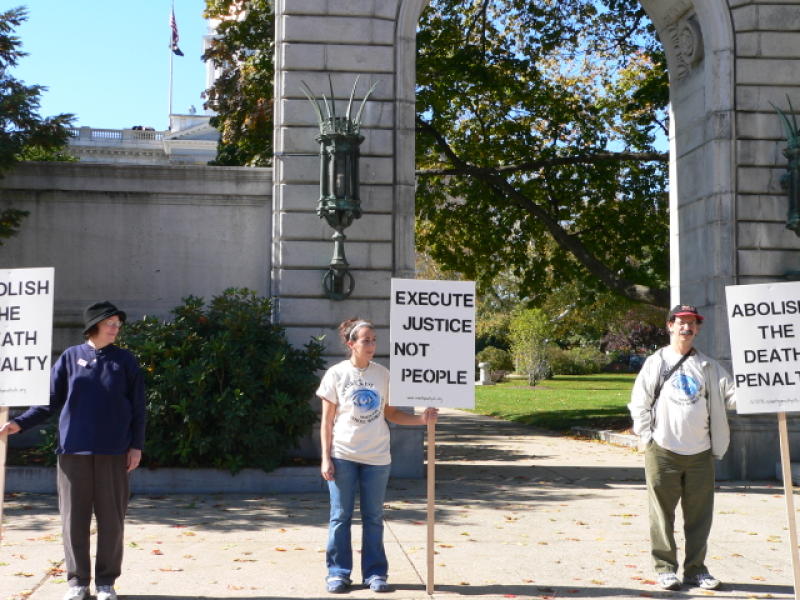
For decades, the name John Wayne Gacy stood as the benchmark for human depravity. When the “Killer Clown” was finally led to the execution chamber in 1994, many believed the world would become a more just place the moment his heart stopped. Social studies teacher Scott Gregory was there that day, a witness to the law’s finality. But as the chemicals began to flow, the machinery malfunctioned; the lethal drugs solidified in the IV tube, clogging the line and turning a clinical procedure into a prolonged, agonizing spectacle. Watching a man—even a monster—suffocate in a botched execution changed everything for those in the room.
“I used to think that if someone deserved the death penalty, it was this guy,” Gregory said. “But, after seeing what happened that day, I don’t think anyone deserves it.” This exposes the fundamental flaw of capital punishment: when the state attempts to deliver justice through killing, it often only succeeds in debasing the humanity of everyone involved. It is a system that claims to deliver justice, yet it stands as an admission that we have mistaken vengeance for law.
Capital punishment remains one of the most polarizing and emotionally charged issues in modern society. While the opposing side calls it a barbaric, ineffective, and racially biased practice that violates fundamental human and constitutional rights, supporters argue that it delivers justice, deters the most heinous crimes, and provides a necessary sense of closure to victims’ families. However, we must look deeper than the political rhetoric and the headlines to ask if the death penalty truly delivers on these promises. Does it actually provide resolution, deterrence, and closure, or is it a performative act of violence that fails to align with our ethical and legal standards of justice?
The complexity of the system is often lost in these debates, beginning with the fundamental jurisdictional divide. Social studies teacher Sydney Neukirch explains that because murder is a state crime, individual states “determine what’s a first degree murder versus second degree murder” and “determine how they punish people who are convicted of murder.” This leads to a geography of justice where one’s life may depend on which side of a state line a crime occurred. Neukirch explains that while some states still have the penalty on the books, many have put a moratorium in place, meaning no one will be executed until a certain point. Importantly, she highlights that many states have ended the practice altogether. “With the advent of DNA technology in the 90s, they’ve just found too many cases of people who had been wrongfully convicted or, in some terrible cases, wrongfully executed,” Neukirch said.
Before we can truly evaluate the death penalty, we must first grapple with the definition of justice itself. According to ethicists Manuel Velasquez, Claire Andre, Thomas Shanks, and Michael J. Meyer at Santa Clara University’s Markkula Center for Applied Ethics, justice fundamentally means “giving each person what he or she deserves.” This definition establishes a high bar. For a punishment to deliver true justice, we must be able to objectively determine the exact value of what was taken and the exact value of what should be restored through the act of punishment.
To achieve this balance, victims need the assurance that similar harms will not be tolerated by the state, and the punishment itself should allow the perpetrator the opportunity to demonstrate remorse. While the death penalty certainly assures victims and society that a wrong will be met with a severe response, it fundamentally denies the perpetrator any chance at rehabilitation, growth, or the expression of genuine remorse. It is a finality that precludes the possibility of redemption, which many philosophers argue is a necessary component of a just society. When asked if the death penalty helps the criminal justice system achieve the five goals of justice, namely retribution, deterrence, incapacitation, rehabilitation, and restoration, Neukirch finds that it does not. “I think it satisfies the social conscience… we want to see wrongdoers punished,” Neukirch said. While it achieves incapacitation, she notes it fails in deterrence and rehabilitation.
Some argue that for delivering justice, the principle of proportionality is crucial—the “lex talionis” or law of retaliation. This suggests that perpetrators should suffer in a manner that mirrors the suffering of their victims. David Dukart, an opinion contributor for The Enquirer, has argued that for the sake of justice, criminals should be awake during their final moments and that “executions should not be painless.” This belief that the state should inflict pain is echoed by the current administration. President Donald Trump has stated his belief that criminals should be “imprisoned in conditions consistent with the monstrosity of their crimes.” If pain is the currency of justice, one might argue the perpetrators deserve to feel every bit of it. However, the American legal framework was designed specifically to rise above such primal instincts.
According to the Eighth Amendment of the U.S. Constitution, “cruel and unusual punishment” is strictly prohibited, even when the state is punishing the most notorious and reviled criminals. As legal analyst Ian Millhiser states in his extensive examination of the judicial system, even if we believe criminals deserve harsh treatment, the execution of that punishment must be carried out humanely if we are to remain a civilized nation.
Moreover, the Universal Declaration of Human Rights, as established by the United Nations General Assembly, asserts that no one should have to endure “torture or cruel, inhuman or degrading treatment.” Since human rights are by definition universal, they must apply even to the worst offenders among us. Yet, our current execution methods frequently and flagrantly violate this key principle.
This constitutional protection is increasingly at odds with modern execution methods. Neukirch points out a major evolving hurdle: the drug that had been used in lethal injection is no longer made. This has forced a dangerous period of trial and error, where “States are having to basically experiment with new methods and have not yet found a humane alternative to the lethal injection,” Neukirch said.
The reality inside the execution chamber is rarely as clinical or peaceful as the public is led to believe. As Supreme Court Justice Sonia Sotomayor stated, the use of unreliable and experimental lethal injection drugs results in death row inmates being exposed to “the chemical equivalent of being burned at the stake.” According to Millhiser, despite these gruesome accounts, the courts have often concluded that the “death penalty enjoys a kind of super-constitutional status.” This legal loophole requires executions to proceed even when there is no demonstrably humane way to conduct them.
The situation is regressing further in some states. South Carolina, for example, recently made electrocution the default execution method, offering firing squads as the only alternative. Such punishments are deeply dehumanizing and challenge the very civil liberties that define an American citizen. If justice is built on a foundation of fairness and human dignity, then state-sanctioned torture undermines that foundation entirely. Vengeance is a never-ending cycle, a “blood feud” that the law was specifically created to end, not indulge in.
A primary pillar of support for the death penalty is the claim that victims’ families require it for closure. The argument suggests that to grapple with their immense grief, families need the psychological weight of knowing the person who destroyed their lives is no longer on this earth. David Dukart suggests that letting a murderer live, even in a maximum-security prison, is “cruel to the families left behind,” and that “society does not owe it to a murderer” to preserve their life. The administration shares this sentiment with President Trump, stating that “efforts to subvert and undermine capital punishment … make a mockery of justice and insult the victims of these horrible crimes.” This narrative creates a sort of national guilty conscience, suggesting that we are failing victims if we do not execute on their behalf.
But when we speak to the families themselves, a different, more complex picture emerges. For many, the execution is not the healing balm they were promised. Before the murder of his brother, David Taynor was a staunch believer that the death penalty was crucial for delivering justice and closure. But as Molly Walsh reports for Cleveland.com, Taynor’s perspective shifted radically after he actually went through the system. He now argues that “taking someone’s life in the name of someone else’s is not justice … It is simply state-sponsored murder.” Taynor realized that no amount of state-sanctioned death could bring his brother back or fill the void left by his absence. The execution was an end, but it was not a beginning for his healing.
This sentiment is echoed by experts who study the long-term effects of the death penalty on survivors. According to Marilyn Armour, the director of the Institute for Restorative Justice and Dialogue at the University of Texas, Austin, victims’ families “tell you over and over again that there’s no such thing as closure.” The word itself is often seen as an insult to the enduring nature of their grief.
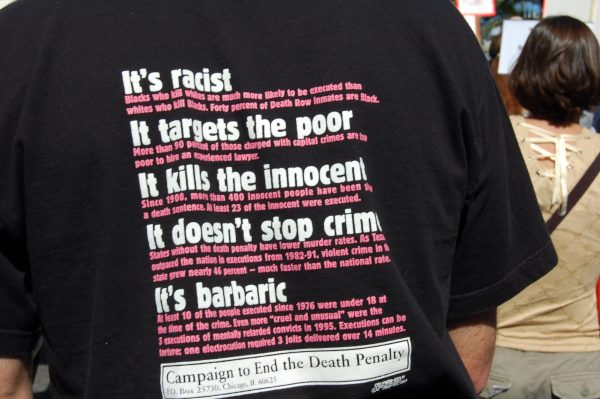
In fact, research suggests that victims’ families often fare better psychologically when the perpetrator is sentenced to life without parole. A 2012 study concluded that families in Minnesota—a state without the death penalty—were able to move through the stages of grief more effectively than those in Texas because they weren’t forced to endure the “death penalty marathon”—the decades of appeals, stay orders, and sensationalized media coverage that turn a private tragedy into a public spectacle. A death sentence forces a family to relive their trauma every time a new court date is set, often for 20 or 30 years, while their actual needs for mental health support and community care are ignored in favor of a political win.
Beyond the emotional toll, we must ask: Does the death penalty actually keep the public safe? In theory, it is presented as the ultimate deterrent—the one punishment scary enough to make a potential murderer pause. President Trump describes it as “an essential tool for deterring and punishing those who would commit the most heinous crimes.” But the empirical data simply does not support this claim. If the death penalty were an efficient deterrent, the states that use it most frequently should be the safest in the country. Instead, we see the opposite.
Former Maryland Governor Martin O’Malley has pointed out that the average homicide rate in states with the death penalty is 4.4 per 100,000 people, while it is significantly lower—at 3.4 per 100,000—in states that have abolished the practice. O’Malley also sheds light on the staggering economic cost of this failed policy. When Maryland moved to abolish capital punishment, it found that sentencing a prisoner to death costs the taxpayer $400,000 more than a sentence of life in prison.
This is due to the intensive legal processes required to ensure (or attempt to ensure) that an innocent person isn’t killed. By reinvesting those millions of dollars into public safety measures—such as drug treatment, better police training, and community support systems—Maryland saw its crime rates decrease by 42%. It becomes clear that the death penalty is not a tool for safety, but a financial and procedural hurdle that prevents us from investing in things that actually work.
We must also confront the reality of who ends up on death row. It is rarely the “monsters” depicted in fiction, but rather the products of a failed social safety net. In his TED Talk, “Lessons from Death Row Inmates,” attorney David Dow explains that 80% of death row inmates come from severely dysfunctional backgrounds. These are individuals who grew up in the crosshairs of abuse, extreme poverty, and undiagnosed mental illness. Most had early, negative exposure to the juvenile justice system. After representing over a hundred death row inmates, Dow notes that a traumatized fifteen-year-old joining a gang in a high-crime neighborhood isn’t performing a cost-benefit analysis of the death penalty. He is simply trying to survive the next hour. Dow argues that for every $15,000 we spend intervening in the lives of at-risk children through education and mental health care, we save $80,000 in crime-related costs down the road. Preventing crime at the root is not just a “soft” approach; it is the only statistically sound approach to reducing violence.
Even if we were to ignore the economic and deterrent failures, the application of the death penalty in America remains a monument to systemic racism. The Death Penalty Information Center reports that a staggering 78.1% of executions involve cases with white victims, even though Black people are victims of homicide at much higher rates. This disparity sends a clear, harrowing message: in the American judicial system, a white life is worth more than a Black life. Bryan Stevenson, the founder of the Equal Justice Initiative, has stated that “the race of the victim is the greatest predictor of who gets executed in America.”
Stevenson further links our modern execution chambers to our history of racial terror, noting that “the states with the highest lynching rates are the states with the highest execution rates” today. The geography of the death penalty mirrors the geography of the Jim Crow South. When the same crime yields vastly different punishments based on the skin color of the defendant or the victim, the system has failed the most basic test of justice. The death penalty doesn’t just risk being influenced by racial bias; it is an institution that was historically built to codify it.
Ultimately, we have to ask what kind of society we want to be. If we believe that murder is the ultimate wrong, how can we justify the state committing the same act? Two wrongs do not make a right; they simply increase the number of deaths in the world. The death penalty does nothing to address the radicalization or the social rot that leads to violence. Consider the aftermath of the 9/11 attacks. While the nation was unified in its desire to see the perpetrators punished, the eventual killing of Osama Bin Laden did not end the threat of terrorism. It did not dismantle the ideology of Al Qaeda or prevent the rise of subsequent groups. Our safety didn’t come from a high-profile execution; it came from the systemic, unglamorous work of building better security, better intelligence, and better international cooperation.
If we applied this same logic to domestic homicide—focusing on the “why” and the “how” rather than the “who”—we would move toward a future where crime is prevented before it happens. This approach would save thousands of lives and millions of dollars. It makes sense to deal with the problem at its root rather than looking for a violent, late-stage catharsis that fails to make us safer.
Before I began my inquiry into this subject, I will admit that I saw the death penalty as a practical, albeit grim, way to “close the case.” I viewed it as a form of social waste management for those who had proven they could not live among us. But through my research, I have been forced to confront the truth: an eye for an eye truly does turn the whole world blind. Justice cannot be served by violating the same principles of human rights that it seeks to uphold.
The death penalty has failed victims who were promised closure and received only decades of legal limbo. It has failed taxpayers who were promised safety and received only a massive bill. It has failed the marginalized who were promised fairness and received only bias. It is a broken system that keeps repeating the same mistakes, hoping for a different result. Every botched execution, every exonerated person who was nearly killed by the state, and every racial disparity prove that we must stop pretending this system works. The death penalty is not justice; it is a surrender. It is an admission that we have given up on the belief that our society can be better than its worst crimes. Until we dare to abandon the noose and the needle, we will remain trapped in the same cycle of violence we claim to condemn. We must choose a path that reflects our highest values, not our lowest instincts.






Ezequiel Martinez • Feb 13, 2026 at 1:15 pm
How can the current president advocate for the death penalty if he’s convicted of 34 felonies?
evan • Feb 18, 2026 at 8:27 am
How? He has all the charges dropped because he knows what the Democrats are trying to do? He’s trying to help us and also their really is not any hard evedinces that proves most of the fellons witch the democats seem to have no evedeince shocking ring in not supried because most of them are crroupt
Ezequiel Martinez • Feb 19, 2026 at 7:43 am
There is a lot of evidence that he has committed many crimes. He is mentioned in the Epstein files over 1000 times, not to mention the redacted parts of the files that his followers edited. Not to mention what he is doing as the president is unconstitutional. He is trying to remove the 14th Amendment, which grants birthright citizenship. Donald Trump pardoned the January 6th protestors because they were protesting for him, even though they killed people. He is taking away the freedom of the press by cutting funding to national news sources that are neutral with politics, but still have empathy for people who are being killed, such as NPR and PBS. Trump is trying to criminalise not only recording but also watching ICE. He also got Jimmy Kimmel taken off the air because he didn’t agree with him. Jimmy Kimmel was only put back on because so many people actually retaliated. I’m not saying all of the democrats are good, Bill Clinton was in the Epstein files, but you can not possibly defend Donald Trump if you look at credible sources.
Sources: NPR, CNN, BBC, Copies of the Constitution
evan • Feb 19, 2026 at 12:14 pm
sorry i dont listine to Democratic news i like to actually have current stuff, like fox new wich i watch, because most of the news you posted are just fake
Laura Faust • Mar 2, 2026 at 1:42 pm
I understand your right to believe in what you do; however, if you are going to claim what you are claiming, you have to have the sources to back them up. You claim that the sources proving Trump’s crimes are inaccurate and the accurate news source is Fox News, yet according to a 2012 study, Researchers asked 1,185 random nationwide respondents what news sources they had consumed in the past week and then asked them questions about events in the U.S. and abroad.– On average, people correctly answered 1.6 of 5 questions about domestic affairs. Someone who watched only Fox News would be expected to answer 1.04 domestic questions correctly compared to 1.22 for those who watched no news at all. ( Michael B Kelley) Again, you have every right to express what you believe, but if you are to claim inaccuracies towards another person, your sources have to be better than just “not listening to democratic news,” and “having current stuff, like fox new.” Please keep this in mind for the future and attempt to fix your literacy as well, please and thank you.
Evan • Feb 19, 2026 at 12:22 pm
Well i am because aprrently im the only Republican in this school, so deal with it. You have your oppinnon and I have mine, and yes i am a strong trump supportter if kamala was presdeint, our country would be in worse shape than it was under biden
Evan • Feb 19, 2026 at 12:30 pm
All the comment i have put on here somehow just disspaered shocking
Jeremy Wilner • Feb 24, 2026 at 9:48 am
They weren’t dropped, he was found guilty on all 34 counts. He hasn’t faced any penalty because he was ‘unconditionally discharged’ (dismissed from trial before sentencing) due to being president at the time.
Evan • Mar 3, 2026 at 10:58 am
Sorry i can’t spell right. I am on an Iep so I take the literary offensive