



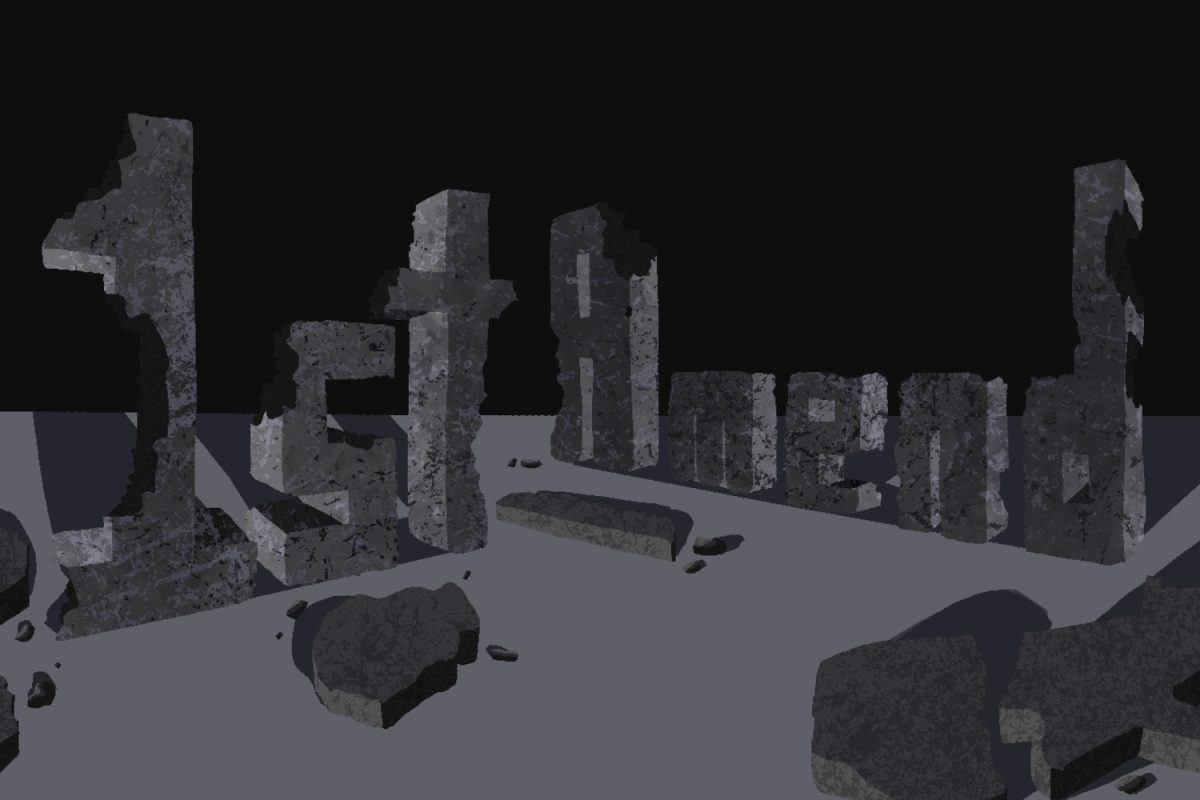
Last week was Scholastic Press Freedom Week, an annual nationwide event organized by the Journalism Education Association that celebrates the importance of student journalism and the First Amendment. This year’s theme was “Press Under Pressure,” focusing on attempts to restrict the reporting of student journalists.
Recently, in Metea, a segment was illegally excluded from an episode of The Mane, which violates the First Amendment.
In April of 2025, Bill Owens, the executive producer of “60 Minutes,” stepped down from his role after former president of CBS News Susan Zirinsky was re-hired to “review” sensitive segments. According to The New York Times, Owens said Paramount executives were “intruding” on what he thought were “editorial decisions.”
“Over the past months, it has become clear that I would not be allowed to run the show as I have always run it, to make independent decisions based on what was right for ‘60 Minutes,’ right for the audience,” Owens said in a memo to his staff. “I am stepping aside so the show can move forward.”
Students have also experienced similar cases of review and censorship. They deal with stories being taken down often due to topics that do not align with the school administrator’s beliefs. Recently, the University of Indiana forced its student print newspaper to stop printing right after the firing of its student media director. According to an Indiana Daily Student Letter from the Editor, the university and Media School had previously censored parts of their paper.
Political topics are the essence of newspapers. Journalists lose their First Amendment rights with immediate disapproval of articles.
The Supreme Court case, Tinker v. Des Moines, was a case about censorship in schools related to students wearing black armbands for American soldiers in the Vietnam War. Court Justice Hugo L. Black. made the decision to protect students’ constitutional rights.
“It can hardly be argued that either students or teachers shed their constitutional rights to freedom of speech or expression at the schoolhouse gate.”-Justice Hugo L. Black
This means student journalists are not limited to their opinions and have freedom under the First Amendment.
In 2016, Governor Bruce Rauner signed into law Speech Rights of Student Journalists Act which prevents censorship by school officials, and can only be excluded if it falls under the exceptions described in Section 15, “This Act does not authorize or protect expression by a student journalist that: (1) is libelous, slanderous, or obscene; (2) constitutes an unwarranted invasion of privacy; (3) violates federal or State law; or (4) incites students to commit an unlawful act, to violate policies of the school district, or to materially and substantially disrupt the orderly operation of the school.”
Students are responsible for the content and legal accuracy of their work. They identify stories of community interest and ensure their stories meet the highest standards of accuracy, balance, and ethics. Not every school has the privilege to publish its own opinions.
Just because students can publish whatever they want does not mean they all do or are able to. For instance, Waubonsie’s The Beat has not released a single piece of journalism since Oct. 27. 2025. Neuqua’s The Echo is currently struggling with staff numbers and recently changed sponsors, with a slowdown in recent content stemming from these changes.
We are witnessing a First Amendment crisis. Censorship is in Metea, and both of our fellow schools have publications that do not support student journalists sufficiently. The Stampede’s editorial board expresses its concern for these publications.
In addition to the censorship District 204 has faced, Neuqua and Waubonsie’s journalism programs are not the same as Metea’s. Metea hosts a student-led newspaper journalism class that allows for the sole focus of news and other categories of content to be distributed via Metea Media and The Stampede. Metea Media is updated at least once a day and is monitored by the editors and the publication’s adviser to uphold a continuous and truthful feed of information.
The Beat, a joint class with media production, and The Echo, a club at Neuqua, are not proper classes. This takes away students’ access to media dedicated to their community.
Inconsistent publishing is one indicator that District 204 should consider enforcing a cohesive structure to ensure that news is consistently broadcast to the necessary communities.
More structure among the Valley publications would aid in coverage of District 204 events from numerous angles.
District 204 high schools would have benefited from this coverage on the nationwide student walkout protest against ICE, but only Metea Valley was able to provide official coverage via Metea Media for the District 204 schools that participated.
The importance of sharing a structured journalism program lies in the ability to provide the entire District 204 community with factual, timely, and useful information from multiple perspectives of high school students from the surrounding area, and encouraging student voices to be heard and showcasing the power such voices have in altering and aiding our District 204 community.
In District 204, each department within a school distributes funds to each program. For example, the district provides Metea with funding, which then distributes those funds among departments. From there, the departments distribute the money to their respective programs.
Media Production 1, 2, and 3 are all in District 204’s Technology and Engineering Education department. The Stampede, newspaper, and The Rein, yearbook, are both part of the English department.
At Metea, newspaper and yearbook journalism do not get funds from the English Department. We rely entirely on the money made from yearbook sales.
The Stampede Editorial Board believes that not only do District 204’s administrators need to fix the inequalities between publications, but they also need to strengthen the path to becoming student journalists in the way they do for music programs.
Similar to how music students begin their instruments in sixth grade, middle-schoolers need opportunities to develop their journalism skills. District administrators and school leaders need to give resources to help middle schools start a student-led newspaper by providing funding, connecting them to high school publications, and teaching educators how to be journalism advisors.
For the high schools, give students more incentives for joining journalism by offering dual credit and honors opportunities, even if it is just for editors. Support programs by ensuring publications aren’t being censored and that student voices are valued.
Not only does the district need to do more to support student journalists, but so do the individual schools by providing publications with more funding.
School leaders and District 204 administrators have neglected their journalism programs and are creating inequalities between not only the publications but also the voices given to students.
Student journalists have the important and unique job of giving a voice to their community. Their voices should be celebrated—not silenced.



▸ Rude or obscene language (i.e. swear words, sexual jokes, violent threats, etc.)
▸ Hate speech (i.e. racism, sexism, homophobia, etc.)
▸ Insults towards a specific student or a teacher
▸ Content that is irrelevant to the article or does not add to the discussion
▸ Submitting comments under somebody else's name
Refer to the student handbook for further specifics on what is considered appropriate.
The Social Media Editor will read and evaluate all comments. Should there be any issues with a particular comment, the Social Media Editor will consult the newspaper adviser and Online Editor-in-Chief.